After creating new emissions-reduction rules for industries from oil-and-gas to commercial buildings over the past six years, Colorado regulators are on the verge of doing something they’ve never done before — crafting new limits specific to one company.
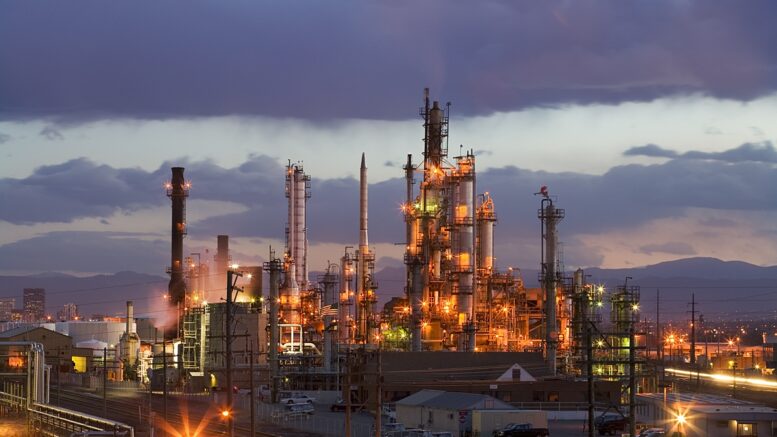
Technically the initiative, set to culminate in a final vote in May, is meant to come up with new rules for petroleum refining operations in Colorado. But there is just one refinery in the state — the Suncor Energy refinery in Commerce City — and there are no plans on the horizon for any other companies to enter the local market.
The rules, which follow a legislatively mandated April report on the refineries sector that found that Suncor ranked in the top half of national refineries for its pollutant emissions, have two major areas of focus. They would reduce the emissions impact of refinery operations, particularly from nonroutine events like startup and shutdown and from flaring, and it would improve communications by the refinery when it has unexpected emissions events or plans major changes.
Suncor is one of Colorado’s most important companies, refining one-third of the gasoline sold in the state, half of its diesel fuel and one-third of the jet fuel used at Denver International Airport, which is one of the biggest economic engines in the region. It also employs about 500 people at three adjacent plants it operates in Commerce City.
Why target Suncor?
But area residents also say the facility, which opened in the 1930s, is responsible for high levels of pollution and disease in the primarily lower-income area and that unplanned events have released black smoke and excess pollution onto the population too often. Because of that, Suncor has received outsized attention when the state has drawn up other regulations, especially for industrial facilities, and environmental groups have called repeatedly for the state to increase penalties on the plant or to shut down its operations.
While Colorado Department of Public Health and Environment officials remain early in the rulemaking process —they released a set of rulemaking concepts Friday in advance of proposing specific rules — they understand the high-profile nature of these deliberations. They held three public meetings in August that attracted 121 attendees to discuss potential concepts, and those meetings showed the intensity of feelings about the Suncor plant.
Former Commerce City Councilwoman Renee Chacon called at an Aug. 26 for new regulations that could levy greater penalties on Suncor, while area resident Laura Botello pleaded for stricter emissions limits on the Suncor plant. Suncor officials, meanwhile, have assured CDPHE leaders that recent and future investments have been aimed at boosting the company’s regulatory compliance.
“Suncor will collaborate with regulators and stakeholders throughout the rulemaking process in developing reasonable and cost-effective regulations that will support the continued supply of reliable and affordable fuels to Colorado and environmental improvements,” the company said in a statement to The Sum & Substance.
What the refinery regulations could include
The rulemaking concepts first would require Suncor — or any other petroleum refineries that open in Colorado — to operate according to best air-pollution control practices via a general-duty clause that lets CDPHE hold these sources to performance standards that are not limited by federal requirements. And when events occur that boost emissions of harmful pollutants, the proposed rules would require greater analysis by refineries of the root causes of these problems, including consideration of corrective actions to prevent such events in the future.
Several concepts in the rules are likely to focus on flaring — the process by which refineries burn off excess hydrocarbon gases through a flame-topped stack, often to prevent pressure buildups in equipment. Environmentalists criticize the practice, arguing that it adds to global warming by releasing carbon dioxide directly into the atmosphere and that most flares leak some amount of unburned methane, which is particularly dangerous.
One proposal put forward by CDPHE involves establishing more comprehensive and routine requirements for flare-minimization plans, including new measures to reduce non-emergency flaring. Another proposal would require Suncor to install flare gas recovery systems on all four of its process flares, where just two have them now (although the company plans to shut down one of its flares with a current recovery system and reroute gases to one of the others).
At the urging of residents, the rules also contemplate ways to bolster notification requirements sent from Suncor to surrounding communities when it has unplanned events such as startups, shutdowns or equipment malfunctions that produce excess emissions. A 2021 law requires three tiers of notifications — from reverse 911 calls if residents must shelter in place due to an emergency to messages on its website when the excess emissions may not result in the community seeing, smelling or hearing anything unusual.
What should refinery notifications include?
Several residents complained during the Aug. 26 public meeting that the messages sent by Suncor after a May event that produced black smoke were unclear as to the nature and severity of the problem and took too long to get to them. Requiring more information and specific pieces of information in these mandatory community notices could address some of the concerns, said Stefanie Shoup, deputy director of regulatory affairs for the Air Pollution Control Division within CDPHE.
Finally, the Sept. 18 rulemaking concepts contemplate enhanced public outreach by the company before it seeks permitting for projects that could change air-pollution levels. This would allow the community to have earlier awareness of such projects and be more engaged in the permit-consideration process.
Comments and questions from community members at the Aug. 26 meeting indicated that many of the activists who have pushed for increased regulation of the Suncor plant aren’t satisfied with the scope of the rules. Attendees asked, among other things, what greater penalties could be enforced on the refinery, how the state can mandate that Suncor upgrade its systems and whether it could force it to operate under an updated permit.
“Short of real action”
Shoup noted that the federal government holds the responsibility for issuing permits and enforcing penalties if the refinery is not operating withing those permits, but the state can add requirements to those permits that the federal government enforces. CDPHE also can mandate operational changes that would lead the company to update equipment in order to be in compliance, but its ability to mandate equipment replacement is very limited, said Jessica Ferko, APCD planning and policy manager.
Chacon said she wants CDPHE to do more, such as stepping in to shut down the refinery’s systems when community members believe that flares are being overused.
“It’s great that you’re addressing Suncor, but it still falls short of real action,” she said.
Such comments show why CDPHE is taking extra steps to get community and industry feedback before creating what will be precedent-setting rules in Colorado.
The department is expected to have proposed rules finalized by November. It then will ask members of the Colorado Air Quality Control Commission in December to set a May hearing date for a vote on the rules.