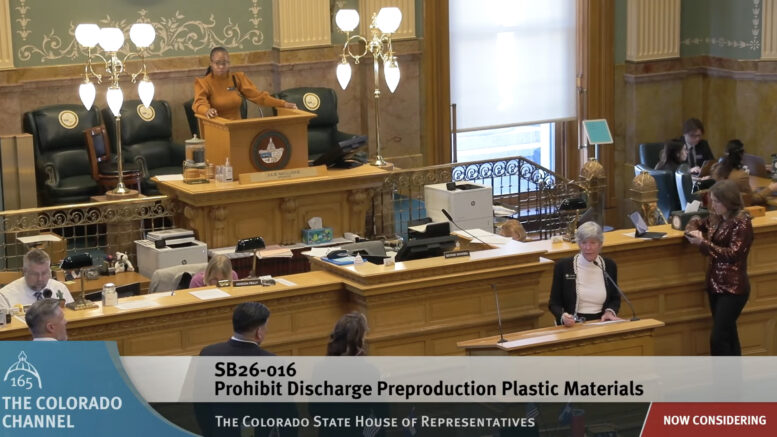
Gov. Jared Polis signed into law Monday a bill that would prohibit companies from discharging plastic pellets into state waters and many landfills — and then immediately asked in a letter for legislators to pass another bill to fix the new law this session.
The request to quickly change Senate Bill 16 is based on the wording of one provision in the law. It remains unclear whether sponsors plan to do as Polis has requested.
SB 16, sponsored by Democratic Sens. Lisa Cutter of Morrison and Katie Wallace of Longmont, targets plastic pellets, which are lentil-sized pieces of material that are melted down by manufacturers to make everything from toys to kitchenware to computers. When these pellets fall off trains that are carrying them or get discharged from factories, they can end up in fields or streams and can be eaten by animals or ingested by humans via water, causing health problems and leaving waste that doesn’t biodegrade.
The new law adds plastic pellets to the section of existing state law that bans illegal discharge of certain chemicals and toxins by companies and individuals, specifically barring their discharge into state waters, wastewater, stormwater runoff or other runoff. It also prohibits discharge of these pellets or other preproduction plastic materials onto land at a location that doesn’t have a state or federal permit authorizing hazardous waste disposal. And it prohibits the Colorado Department of Public Health and Environment from issuing permits for this type of discharge.
Why Polis is concerned about land-disposal limitations

Gov. Jared Polis points to legislators during his final State of the State Address in January.
Sponsors nixed the provision of the bill that arguably was most concerning for plastics-industry leaders when they removed proposed criminal penalties from the bill in a House committee. But Polis said he remains very worried by the provision that bars discharge of the pellets into land-based locations that can’t hold hazardous waste — a very limiting provision, as only a small percentage of landfills are permitted to take hazardous waste.
Specifically, he wrote in a statement that accompanied his signing of the bill, this provision will bar disposal of these materials into a solid waste landfill if the production facilities can’t reuse or recycle these materials. This, he said, is a departure from how state law typically regulates solid waste, and it could result in burdensome compliance requirements for the manufacturing facilities that are trying to ensure the pellets don’t end up in water or stormwater streams.
“I urge the General Assembly to fix this in legislation this session to ensure plastic pellets or other preproduction plastic materials can be disposed of in solid-waste landfills,” the Democratic governor added at the end of his signing statement.
Polis seemed to confirm industry leaders’ concerns that SB 16 could discourage plastic manufacturers from relocating to or expanding in Colorado at the same time that the state is trying to build a circular economy around the recycling of plastics and other materials. To build such an economy, which makes it feasible for plastics recyclers to open plants that don’t now exist in the state and then sell the recycled plastic to manufacturing firms, manufacturers can’t be scared from operating here by punitive regulations, officials said.
Dems backed SB 16 while GOP opposed it
State Rep. Meghan Lukens explains her plastic-pellets regulation bill to the Colorado House in March.
The debate around SB 16 mirrored that of many environmental regulations.
Democrats argued that it is needed to protect Colorado’s natural resources, particularly as a study by the Colorado Research & Policy Center in 2023 found microplastics in notable levels in 100% of the Colorado waterways it studied. These microplastics can harm fish and other animals that ingest them, and they can move through water samples into the human body, where they can hurt reproductive health and lead to increased cancer cases, bill backers said.
“Once plastic pellets are spilled, they’re very difficult to clean up, and this bill stops plastic pellets from being discharged into our waterways in the first place,” cosponsoring Rep. Meghan Lukens, D-Steamboat Springs, said in a news release. “Our bill puts our rural economies first by putting an end to plastic pellet discharge pellets so we can better protect the fish and wildlife that call our waterways home.”
Still a month-and-a-half left in session
Colorado state Rep. Carlos Barron speaks against the plastic-pellets regulation bill in the House in March.
But detractors said it creates unneeded and potentially costly regulations without citing any incidents in Colorado that have demonstrated that mass pellet discharge is a problem. Rep. Carlos Barron, R-Fort Lupton, noted that plastics-industry leaders already have implemented a campaign to teach companies how to avoid such discharges and have built-in economic incentives to ensure that they are not losing products to discharges.
“We continue to pile on our industries in Colorado to make it less and less welcoming for them to operate in Colorado,” added Sen. Mark Baisley, R-Woodland Park.
SB 16 ended up passing both the House and the Senate strictly on Democratic-led party-line votes.
The session is scheduled to run through May 13, so the sponsors of SB 16 or other legislators have ample time to introduce a bill to address the prohibition on most landfills accepting plastic pellets if they would like to do so. At this point, however, leadership in the introducing chamber must specially approve introduction of any late bills.