
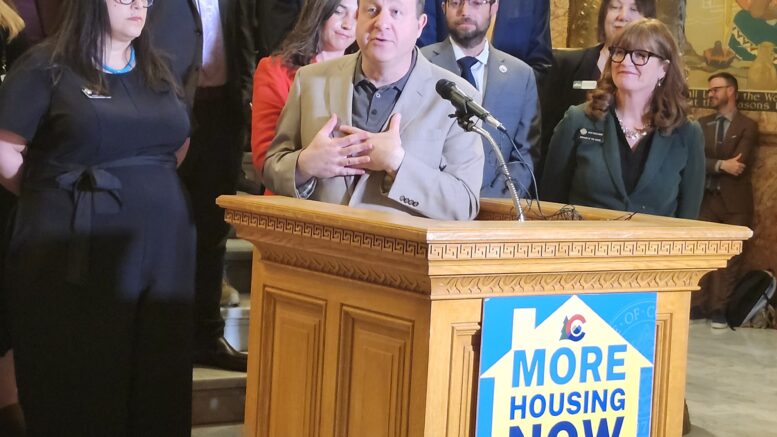
Gov. Jared Polis and legislative Democrats are once again pushing a package of bills to boost affordable-housing construction this year, though the proposed changes are not nearly as sweeping as those introduced and passed over the past three years.
A 2024 bundle of bills, some of which remain the subject of litigation, aimed to boost multifamily housing in urban areas by requiring denser zoning near transit lines, eliminating parking minimums for new apartments and nixing occupancy limits for unrelated tenants. Then last year, the Democratic governor signed a long-sought construction-defects reform law, though builders warned some of its provisions may continue to create a permissive atmosphere for lawsuits that will leave some developers sitting on the sidelines.
What the housing bills would do
Polis’ agenda this year centers on three bills to incentivize or break down some local barriers to the efficient construction of affordable housing, meaning that at least one bill is likely to run afoul of local governments supporting home-rule authority once again. Those three proposals are:
- House Bill 1001, which would allow nonprofits, school districts, colleges, housing authorities and regional transit authorities to sidestep much of the time-consuming local planning process and building housing on land they own that is less than five acres;
- HB 1065, which would create a new tax credit for affordable housing built within a mile-and-a-half of transit hubs and would allow local governments to use tax-increment financing to fund transit and transportation projects within these zones; and,
- HB 1066, which would expand a tax credit given to nonprofit developers of affordable owner-occupied housing to allow them to receive similar breaks for putting up affordable rental housing.
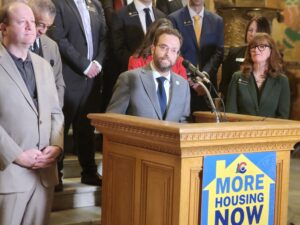
Colorado state Rep. Steven Woodrow speaks at a news conference on housing bills Wednesday.
The measures, while significant, are less sweeping than the 2024 mandates, which also made it easier for property owners to build accessory dwelling units like granny flats near their homes without facing so many local regulatory burdens. Advocates like Rep. Stephen Woodrow, a Denver Democrat who sponsored the transit-oriented zoning-density bill two years ago and is sponsoring HB 1065 this year, said they represent an evolution of what’s needed after an initial round of changes.
Why backers believe government help is needed to boost housing
“Generally, the conversation is: How can we be a better partner (as the state government) and work with you on this?” Woodrow said in an interview following a Capitol news conference that rolled out the bills on Wednesday. “Look, at the end of the day, the data is in and the argument is over. We need to build more housing. And we need to move the ball forward on these other plans.”
The data, as laid out by Rep. Andy Boesenecker — the Fort Collins Democrat co-sponsoring HB 1001, also known as the HOME Act — is this: Colorado remains 100,000 housing units short of what it needs for its population, according to the state demographer’s office. It’s become one of the most expensive states for housing, and it needs to generate 34,000 new units a year to close its deficit and account for growth.
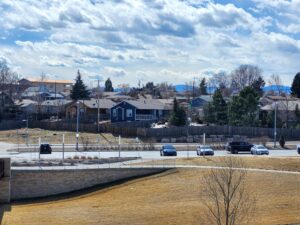
A neighborhood sits just south of the Westminster Station public-transit area. Gov. Jared Polis wants more housing built around transit centers.
Employers also have identified housing affordability as one of their top concerns in surveys done by business groups like the Colorado Chamber of Commerce. The high cost of residing here has made it harder to attract workers from other states and has caused companies that once sought to expand in Colorado to look elsewhere in the country where property costs are not out of reach of so many people.
Polis long has advocated that construction of more housing, whether multifamily or single-family, will boost market competition and bring down the high cost of renting or buying residences. Indeed, a report released Wednesday by the Apartment Association of Metro Denver found the average rental costs across the seven-county metro area have dipped to $1,754 per month — the lowest average rates since 2022 — in part because more than 45,000 new apartments have come online in the past three years.
Local-control grab or addressing a statewide concern?
HB 1001 would seek to speed more homes onto the market by streamlining the approval process for nonprofit and government entities seeking to build on their land, a cutting of red tape that Polis estimated could reduce review times by one-third. Local governments could not reject construction-permit applications if the development is within its zoning height restrictions or doesn’t exceed three stories or 45 feet tall, and conditions related to setback or parking requirements can’t be more restrictive than on other housing developments.
The Colorado Municipal League, which fought much of Polis’ housing package in 2024, criticized HB 1001 as similarly undermining local planning processes by allowing certain groups to go around local rules and build housing without community input. While cities also are looking for ways to boost affordable housing, any attempt to strip their authority to guide communities as they see best could lead to unintended consequences created by a lack of planning of these developments, executive director Kevin Bommer said.
“One-size-fits-all policies from the state capitol ignore the unique needs of each community,” said Bommer — whom Polis singled out for criticism in his State of the State Address last week — in a news release. “House Bill 26-1001 would strip away local authority that has been the foundation of responsible growth and balanced planning in Colorado for decades.”
Building housing near transit
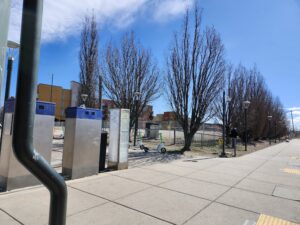
Transit-adjacent vacant lots like this one at 10th and Osage streets in Denver could be ideal sites for multifamily housing, supporters argue.
However, Bommer was complimentary of HB 1065, which would let local governments create zones in a 1.5-mile radius around transit hubs and capture additional sales-tax revenue for use on projects like safety improvements and last-mile transit solutions. The Transit Area Investment Act also would create a new tax credit for construction of low- and middle-income housing in these zones, allowing for as much as $50 million in credits annually from 2027 through 2033.
That bill, Bommer said in an email to The Sum & Substance, appears to position the state as a partner with local municipalities rather than as an entity handing down mandates.
While Polis didn’t highlight it as part of the Wednesday news conference, a fourth, bipartisan housing bill has been introduced this session as well. Senate Bill 1 would remove a prohibition against county governments using general-fund money for multijurisdictional housing authorities, broadening their ability to work with other governments to boost housing — a tool that could be especially valuable in rural areas.
While city leaders and legislative Republicans are likely to oppose what they see as a local-control grab in HB 1001, builders could express frustration that there is little effort in the housing package to roll back regulations that they say are driving up housing costs. The state in recent years has passed green building requirements that will increase the average cost of new housing, further exacerbating the gap between what the average Coloradan can afford to pay for housing and the average price of homes in the state, they say.
A last push to bring down the cost of living
Polis, who is term-limited and can’t seek re-election this year, appears to be making a final push to deal with an issue that has defined his second term, as a shortage of units and an imbalance between supply and demand for Colorado housing has left the state ranked 48th for housing affordability, according to U.S. News & World Report. While there is no silver bullet to lower housing costs, the three bills can “move the bar,” he said Wednesday.
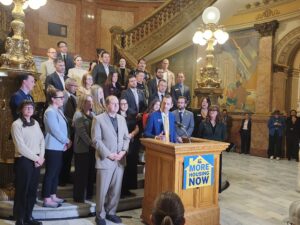
Colorado state Rep. Andy Boesenecker speaks at a Capitol news conference Wednesday on housing bills.
Boesenecker, who defended Colorado’s efforts to streamline construction rules over some local objections by calling the affordable housing shortage a matter of statewide concern, agreed that passage of these three bills won’t cut costs drastically overnight. But existing housing costs are pricing needed professionals like teachers and law-enforcement officers out of their communities, requiring legislators to keep seeking new solutions until that no longer is the case, he said after the news conference.
“As long as it’s the top concern that we hear from people across the state, we’re going to continue to address that need,” Boesenecker said. “I can’t say that we’ll be able to hang the ‘Mission Accomplished’ banner after this is done. But I can say this is a key part to being able to address the housing-affordability crisis.”
SB 1 is scheduled for its first hearing in the Senate Local Government and Housing Committee on Jan. 29, while HB 1001, the HOME Act, is set to go before the House Transportation, Housing and Local Government committee on Feb. 3. The other two bills have yet to be scheduled for their first hearings.