

Colorado farmers and ranchers are finding themselves in increasing legislative conflicts with environmental and animal-advocacy groups, including two bills introduced this year that have sought to limit their uses of common pesticides.
One of those proposals — Senate Bill 65, which sought to ban use of neonicotinoid-treated seeds without prior approval from the Colorado Department of Agriculture — died after its first committee hearing on Feb. 26. Meanwhile, SB 62, which would limit the use of rat-control rodenticides, got pared back significantly in a committee Wednesday, though the Colorado Farm Bureau and other agricultural organizations still oppose it.
Rural Coloradans have for the past decade argued that there is a war at the Capitol that is happening on their way of life as greater portions of the population coalesce in urban areas and reduce their influence on legislation. That’s evident not just regarding the chemicals and pest deterrents that legislators want to limit but in regulation of farm labor practices, which has spawned competing bills this year over whether overtime pay must begin after 40 hours or after 60 hours.
But the battles over the past week regarding neonicotinoids and rodenticides — two terms that hadn’t been uttered at the Capitol frequently in the past — seemed to some observers to be a direct attack on agricultural interests by people who’ve never operated farms. Brandon Melnikoff, director of state affairs for the Colorado Farm Bureau, argued that no one has a more direct interest in sustaining the land that provides their income and feeds their families than the farmers and ranchers who own it, yet these bills assume that unless the state steps in to limit their practices, the environment will suffer.
“A disconnect”
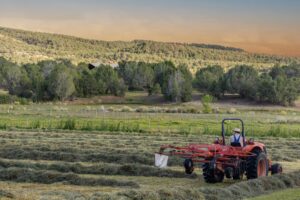
A tractor plows a field.
“When I see the bills that get introduced in this space, oftentimes the sponsors may be well-intentioned … but they’re not on the farm or the ranch and don’t understand the devastating impacts they can have on our production practices,” Melnikoff said in an interview. “I think there’s a disconnect in what they think farmers and ranchers are doing in terms of stewardship and conservation, and they forget that we’re the original conservationists. We’ve been doing that well for centuries.”
SB 65 attacked the usage of neonicotinoid-coated seeds, which are seeds common among corn and soybean farmers that are coated in a pest repellent designed to keep the crops from being attacked by wireworms, Japanese beetles and aphids, among other insects. Only 2% to 7% of the repellents are absorbed by crops, but runoff from the neonicotinoids that get into soil and waterways can decimate the area pollinator population and get inside everything from pregnant women to honey supplies, backers of the bill argued.
The legislation from Democratic Sens. Katie Wallace of Longmont and Cathy Kipp of Fort Collins would have required anyone seeking to use neonicotinoid-coated seeds to ask permission from the Department of Agriculture, which could grant it only after inspecting their property. This, said department deputy commissioner of external affairs Jordan Beasley, would have cut the “unnecessary” use of these pesticides while boosting conservation.
More regulations mean a freer market?

Colorado state Sen. Cathy Kipp speaks about one of her bills on the Senate floor in 2025.
Sponsors argued that the regulations offered by the bill would have benefitted the agricultural market, as they said that 80% of the seed trade is controlled by four chemical companies that require use of neonicotinoids whether farmers want that or not. This new restriction, they argued, would boost business for independent seed dealers offering alternatives and would reduce the dangerous chemical from the environment.
“It has ultimate harms that I don’t think (farmers) are intending for but that I certainly think we will see in the long run,” Wallace told the Senate Agriculture & Natural Resources Committee under questioning. “Yes, I am suggesting more regulation to open up the free market … The free market is not working in this circumstance, and I am asking the government to step in and help it.”
But agricultural leaders scoffed at the notion that minimizing use of one of their most effective pesticides would help them at a time when prices for their products are dropping while costs of maintaining a farm or ranch are rising significantly. Annual changes in precipitation and other weather factors already combine to create an uncertain income stream for many farmers, and Republican Sen. Byron Pelton of Sterling said it’s “a little bit insulting” to tell farmers the state understands their lands’ needs better than them.
Pesticide and rodenticide targeted

Colorado state Sen. Dylan Roberts speaks on the Senate floor in 2023.
Sen. Dylan Roberts, a Frisco Democrat who joined with Democratic Sen. Nick Hinrichsen of Pueblo and the committee’s three Republicans to kill SB 65 on a 5-2 vote, criticized agriculture department leaders for pushing such a major change before they’d expended significant resources on educating the public about the drawbacks of these seeds. A host of farmers and ranchers said they’d been blindsided by the proposal and doubted that the state could contract with enough third-party inspectors to ensure that farmers needing to use the seeds could get approval to do so in the limited time they have to plant.
“I don’t think this has been thought out,” said Don Brown, who served as agriculture commissioner for Democratic Gov. John Hickenlooper from 2015-18. “I look at the practicality of this, and I see this as impossible.”
SB 62 also would have a significant impact on farmers trying to keep rodents from destroying their crops, but the bill could affect sectors too from restaurants to hospitals to schools that also must work to avoid rat infestations. In its introduced form, it sought to ban certain types of rat poisons and rodent glue traps outside of limited uses in public health emergencies.
Kipp, this time sponsoring the bill with Democratic Sen. Lisa Cutter of Morrison, said the restrictions are needed because rodenticides kill not just rats but raptors, wildlife predators and even household pets like dogs who ingest the rats after they are poisoned. About 70% of the 3,100 Americans treated annually for poisoning by anticoagulant rodenticides are children under the age of five, she said, necessitating that the use of such poisons should be limited to those who are trained and licensed to do so.
Rodenticide bill pared down
While witnesses ranging from pollinator groups to veterinarians to an ordained animal minister asked the state to clamp down on the use of these poisons, farmers and pest-control professionals pushed back at a Feb. 19 hearing also in the Senate ag committee. Making it nearly impossible for Colorado businesses to use rodenticide to ward off rats could leave farmers reeling from crop losses and could lead facilities like hotels and restaurants to run afoul of requirements that they be pest-free, opponents said.
So, Kipp and Cutter, who already had introduced an amendment to roll back the applicability of the bill at that first hearing, went further on Wednesday, changing the bill to limit the use only of powerful second-generation rodenticides to licensed professionals. Roberts, who appeared once again to be the key swing vote, said that while the bill still gave him some heartburn, he believed its limits were so specific that they would not damage commercial operations.
“What remains is broader-targeted. But it is not trivial,” said Kipp as the bill advanced on a Democrat-led party-line 4-3 vote to the Senate Appropriations Committee.
An overhead view of rows of crops on a farm
Pesticide regulations “another cut”
But what remains, Melnikoff argued, is another burden on farmers — some of whom are licensed rodenticide applicators but most of whom are not and now will have to pay professional services if they find that they must control a rat problem. This represents another instance of a regulation creating an unnecessary financial burden on one of Colorado’s most longstanding and significant sectors, which has been told more and more over the past 10 years that it shouldn’t be allowed to determine its own practices, he said.
“We’re not trying be overdramatic or anything. But it’s just death by a thousand cuts, and this is another cut,” Melnikoff said.
A study commissioned by the Colorado Chamber of Commerce determined that Colorado is the sixth most-regulated state in America — a finding that has been pointed to especially by natural-resources companies that say they’ve been a special focus of new rules. But now agricultural interests are signing the same song, and that refrain is likely to be repeated as SB 62 advances and the minimum-wage bills come up for debate later this session.