
Just days in advance of a legislative session where debates over energy costs are expected to take center stage, a bipartisan group of southern Colorado legislators on Monday announced they will introduce a bill to delay emissions-reduction mandates for some public utilities.
The group of two Democrats and two Republicans said they are supporting the effort specifically on behalf of Colorado Springs Utilities, which will not be able to hit its goal of 80% emissions cuts by 2030. Without this bill, officials said, ratepayers could face costly increases if the state forces CSU to reduce emissions in ways that are not feasible.
However, the proposal would apply to all municipally and otherwise publicly owned utilities, allowing them to file new Clean Energy Plans this year with extended deadlines if they are having problems identifying replacement options for more affordable fossil fuels. It would not apply to investor-owned utilities like Xcel Energy and Black Hills Corp.
Origin of the proposal
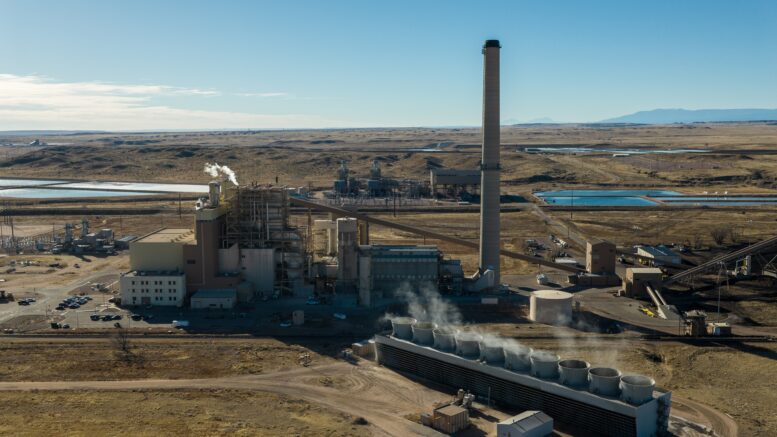
CSU has been working to find alternative fuel supplies to shutter the Ray Nixon Power Plant by 2029, as is now required, but has found contracts for renewable power purchases 30% to 50% more expensive than anticipated, CSU CEO Travas Deal said at a news conference. Unless it can keep the coal-fired power plant open a few more years to build transmission and generation infrastructure, CSU will have to raise rates to the point that it could make the region uncompetitive for businesses that are looking to expand and relocate, putting its residents and its economy at a disadvantage, he said.
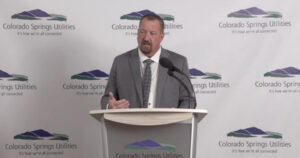
Colorado Springs Utilities CEO Travas Deal speaks at a news conference Monday.
In addition, the utility needs the time to build out infrastructure to ensure that the delivery of energy is reliable and does not lead to energy failures for residents and business, officials said. Even a momentary outage can cost a manufacturing facility or other business hundreds of thousands of dollars in lost productivity, which can end up hurting workers and costing jobs, said Johnna Reeder Kleymeyer, president/CEO of the Colorado Springs Chamber of Commerce and Economic Development Corp.
“Some will ask me … ‘What are you doing on this bill?’ I’m going on this bill because it can strike the balance between reliability, affordability and clean energy in Colorado Springs,” said Rep. Amy Paschal, a Colorado Springs Democrat who described herself as an EV-driving, rooftop-solar-brandishing environmentalist. “It’s not like there’s no commitment to getting us to clean energy. But we will have to do that in a way we can afford the rates.”
Debate rising about green mandates
While the cost of the energy transition long has been a concern with fiscal conservatives, conversation around the subject seemed to pick up after the Colorado Public Utilities Commission approved a statewide Clean Heat Plan in December. That plan will require 41% reductions in emissions from building heating over the next 10 years and 100% reductions by 2050, necessitating a ban on natural-gas heating by that time.
The push by state agencies to reduce emissions comes as the northern Front Range remains in severe violation of U.S. Environmental Protection Agency ozone regulations aimed at limiting the respiratory and other public-health effects of air pollution. State officials have mandated emissions-reduction plans for utilities, oil-and-gas producers, manufacturing facilities, commercial buildings and other sectors, but still the state is not on track to hit the standards.
But the Clean Heat Plan seemed to breed a new level of frustration about the mandates. Union, business and utility leaders held a “Colorado Energy Crossroads” summit last month in which they vowed to oppose efforts to speed the clean energy transition any further because it could hurt home budgets and jobs. A Black Hills official there said that the Clean Heat Plan could raise electricity bills for customers $215 per month.
The bill announced Monday is the first legislative effort to seeks to push back against the speed of the transition. Because municipal utilities are not regulated by the PUC, that body wouldn’t have any ability to get in the way of efforts to delay emissions-reductions mandates by a couple of years.
Why Dems and GOP support utilities on this
After a decade in which increased environmental regulations have largely become a partisan issue, it’s notable that this bill has bipartisan sponsorship. Democratic Sen. Marc Snyder of Manitou Springs will be a prime sponsor along with Paschal, as well as two Republicans — Senate Minority Leader Cleave Simpson of Alamosa and House Minority Leader Jarvis Caldwell of Monument.

Colorado state Sen. Marc Snyder speaks during an online news conference on Monday.
Asked if the bill has any chance at passage, Snyder, the longest-serving legislator of the quartet, said he believes it has “a good shot” because it seeks only temporary extensions of fossil-fuel-burning sources necessary to make clean energy feasible in the long run. Caldwell said he and Paschal have talked with House Speaker Julie McCluskie and Majority Leader Monica Duran and that while they haven’t gotten commitments that the bill could pass, the leaders have been “receptive to it.”
It’s likely that environmental groups that have pushed hard for air-cleaning mandates since Gov. Jared Polis’ inauguration in 2019 will fight the effort as well, as many have noted Colorado already is not on target to reach its 2030 emissions-reduction goals. Backers fielded several questions at Monday’s online press conference asking why, if other utilities are on track to meet their 2030 goals, that CSU would need a special extension.
Utilities’ struggles a bigger business issue
Kleymeyer said that CSU, in endeavoring to meet its 2030 goals, had run into transmission constraints, market conditions resulting in higher renewable-energy prices and the limitations of speeding replacement of equipment at this scale. It needs more time to bring on replacement power and the flexibility to find other clean-energy options, not a limitless exemption from meeting its obligations, she said.
This proposal could run into not only opposition but bills seeking to do just the opposite of what it’s asking. Some state and environmental leaders have pushed for Colorado to accelerate the timeframe for utilities to reach net-zero emissions from 2050 to 2040, though the enthusiasm for such an effort appears to have dimmed somewhat.

Colorado House Minority Leader Jarvis Caldwell speaks during on online news conference Monday.
But the big-picture aims of the bill — to reduce emissions in an attainable rather than rigid way — are certainly part of a bigger conversation that is underway across the state. The Colorado Chamber of Commerce, for example, has convened a Environmental Sustainability & Climate Action Task Force since 2023 that is discussing how businesses can cut emissions without jeopardizing jobs for their workers and the communities that depend on them.
And the tone offered by sponsors on Monday seemed to establish the parameters they hope to set for the debate around environmental goals and energy costs this session — that the state can reach its goals, but it may need to adjust timeframes slightly to address the ongoing affordability crisis simultaneously.
“What we are seeing now is a growing gap between intention and reality,” Caldwell said. “Affordability matters. Reliability matters. And ignoring either one puts real people at risk.”