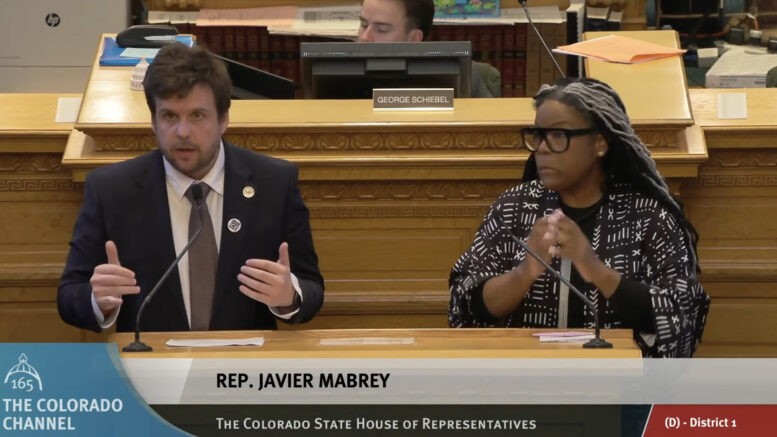
Proponents of eliminating the second election that is now required for union security in Colorado passed their effort through the Colorado House on Monday, though there remains no foreseeable pathway for the bill to become law.
The 42-22 vote was a wholly partisan one, with all Democrats who were present in the chamber voting to back House Bill 1005 and all Republicans voting against it. It heads now to the Senate, where a similar partisan outcome is expected.
HB 1005, sponsored by Democratic Reps. Javier Mabrey and Jennifer Bacon of Denver, is a repeat of a bill that passed the Legislature on a fully partisan vote last year before getting vetoed by Democratic Gov. Jared Polis. Polis said he couldn’t support such a significant law change that had not generated consensus between employers and workers because of its potential negative impact on the economy, and he’s indicated he will take the same step if the same bill reaches his desk this year.
That has not deterred supporters like Mabrey, who said during debate over the past week that he believes the plight of workers is so important that he wants to give Polis another “opportunity to do the right thing.” He said that Colorado’s plummeting affordability continues to be a crisis and argued that changing state law in a way that could boost worker salaries via increased unionization of workplaces is a key way to address that crisis.
Supporters: Law change would boost union organizing
“Today we’re back because the problem did not go away,” Mabrey said shortly before the final vote on Monday. “Rebuilding worker power by strengthening our unions is one of the most critical things we can do.”
The Labor Peace Act requires a majority of employees voting in an organizing election at a workplace to support unionization to form a union, just the same as every state requires. But the 83-year-old law is unique among states in that it requires a second vote of at least 75% of participating workers to allow labor groups to bargain for union security, the ability for unions to take negotiating fees of around 2% directly out of each worker’s paycheck.
Bacon has argued that the second election is an unnecessary obstacle to forming a union — a claim echoed by several workers’ groups who have testified that management has used the time between elections to harass employees into voting “no.” Colorado’s 7.7% rate of private-sector worker unionization — the lowest nationally among all states that are not right-to-work states where union membership can’t be required for employment — would rise with its removal, supporters argue.
Business groups and legislative Republicans continue to counter, however, that there should be a higher bar for unions to take money directly from paychecks, particularly from workers who did not vote for unionization.
Opponents: Labor Peace Act keeps state economically competitive
Opponents have noted as well that Colorado is more competitive for job growth because of its unique law, especially as some expanding companies won’t consider moving to states that require just a single vote for union organizing and union security. Changing the law would hurt the state at a time when increasing regulations already are making it less attractive for potential expansions and relocations, they have argued.
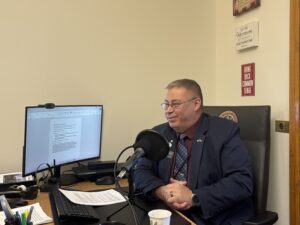
Colorado state Rep. Chris Richardson speaks in his Capitol office about the proposed Labor Peace Act overhaul.
“The Labor Peace Act keeps the peace by saying that if you want labor payments to everyone, you need broad support,” Rep. Chris Richardson, R-Elbert County, said Friday during preliminary floor debate. “I think it’s been proven to have broad support. And sometimes we just don’t need to meddle with things that work.”
With Polis signaling his intent to veto HB 1005 if it passes the Senate, many Capitol observers believe that the effort is aimed as much as building support to pass the bill into law in 2027.
Polis is term-limited, and both Democratic candidates seeking to take his place, U.S. Sen. Michael Bennet and Colorado Attorney General Phil Weiser, have indicated that they are open to signing such a law but also would like to see compromises.
Meanwhile, Democrats sit just one vote short of holding veto-proof majorities in both the House and the Senate and plan to dedicate significant resources to picking up those needed seats in the November election.