After a week in which Colorado’s receding business friendliness was laid bare, Colorado senators took what might be seen as a first step to reversing course Monday, unanimously passing a bill to increase to increase the frequency and thoroughness of regulatory reviews.
The 35-0 approval of Senate Bill 137 comes after the Colorado Chamber of Commerce released a report on Monday identifying 98 instances in which companies either relocated from Colorado or chose other states for expansion since 2019. These lost opportunities, attributed by some corporate leaders to excessive state-level regulations, amounted to 13,607 jobs that either were eliminated or not created as the number of SEC-identified headquarters in the state also fell from 174 in 2022 to 140 in 2025.
SB 137 would step into this conversation by requiring state agencies to review rules and regulations at least once every five years and determine if they are functioning as intended, if they are outdated and if there are opportunities to improve their effectiveness. It would require such reviews to be presented to legislative committees at annual SMART Act hearings, and it would give legislators more opportunities to ask for sunset reviews or audits on regulations.
While the bill originally spurred some concerns among environmental and labor advocates that it would roll back rules needed to protect public health and safety, amendments made in its first committee hearing seemed to remove those concerns. It passed through two committees without opposition and then cleared the Senate unanimously without any debate on Monday, getting senators as ideologically diverse as conservative Republican John Carson and progressive Democrat Julie Gonzales to sign on as co-sponsors.
Colorado regulations are soaring
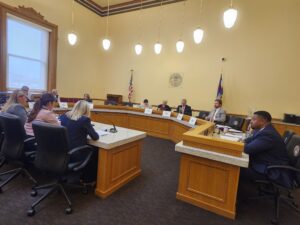
Senate President and SB 137 sponsor James Coleman watches a panel of business and state-government leaders testify for his proposal on March 31 in Senate Finance Committee.
“Rules and regulations are important — they keep our air and water clean, our roads safe and our families healthy,” said Senate President James Coleman, the Denver Democrat who sponsored the bill with GOP Senate Minority Leader Cleave Simpson of Alamosa. “Part of governing responsibly is continually reviewing what regulations are working, where there are gaps and what we need to update or streamline. This bill would ensure that Colorado agencies review their rules every five years to reduce redundancies and improve effectiveness.”
A 2024 study commissioned by the Colorado Chamber found that the Centennial State is the sixth-most-regulated state in America and that 45% of its roughly 205,000 business regulations — a number that continues to rise — are redundant, outdated or excessive. Using figures from other studies, it argued that each 10% increase in regulations can lead employers to divert resources from growth to compliance, stopping some 9,000 businesses from moving forward and costing 36,000 jobs.
The Colorado Chamber Foundation noted that qualitative interviews since 2022 have found that state-level policies have driven some companies to look to other states for expansion, including California, which used to be a state from which companies migrated to Colorado. The number of lost opportunities in the Relocation Tracker report has steadily increased from 6 in 2022 to 27 in 2025, with 21 of the decisions since 2019 involving 200 or more jobs, sometimes reaching into the thousands.
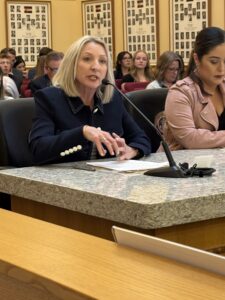
Colorado Chamber of Commerce President/CEO Loren Furman testifies for Senate Bill 137 Tuesday before the Senate Finance Committee.
Other groups add voices on need for regulatory review
Following these reports, some 200 technology company owners and operators and others last week put out an open letter to state leaders warning that the state stands at an “inflection point” for its technology and business climate. The letter called for nine actions, including assessment of regulatory and legislative structures that have led investors and business leaders to conclude that Colorado is losing competitive ground to other states.
Earlier, on March 31, about two dozen business groups testified to the Senate Finance Committee that SB 137 is necessary not as a way to blindly slash at regulations but to systematically examine which could be costing the state more than they benefit it.
Regulations add $93,870 to the cost of the average Colorado home at a time when greater housing affordability is a bipartisan goal, said Colorado Association of Home Builders CEO Ted Leighty, and could be examined to see where changes could bend the cost curve. They have been cited too by bioscience companies that put $500 million in capital investment elsewhere in the past year, and a re-examination could signal more business friendliness by the state, Colorado Bioscience Association Vice President Amy Goodman said.
Another bill seeks to curb childcare regulations
“The passage of this important legislation out of the Senate brings us one step closer to improving the transparency of state government and reducing regulatory complexities for the business community,” Colorado Chamber President/CEO Loren Furman said Monday. “We appreciate the strong support and partnership of Senate President James Coleman and Minority Leader Cleave Simpson, who have demonstrated that leaders from both parties can come together and collaborate for the sake of good governance.”
SB 137 heads now to the House, where it similarly is sponsored by the top official from each caucus, Democratic House Speaker Julie McCluskie of Dillon and Republican House Minority Leader Jarvis Caldwell of Monument.
Senators also passed another regulatory-relief bill, SB 20, by a 31-4 vote on Monday.
That bill, sponsored by Republican Sen. Scott Bright of Platteville and Democratic Sen. Matt Ball of Denver, is one of a group of bills aimed at making childcare more accessible and affordable by rolling back regulations and boosting tax incentives for the sector. Specifically, it allows facilities to begin operation before getting local zoning permits, creates a task force to study operational obstacles for centers and standardizes inspections so that operators can understand more clearly what is expected from them by the state.