
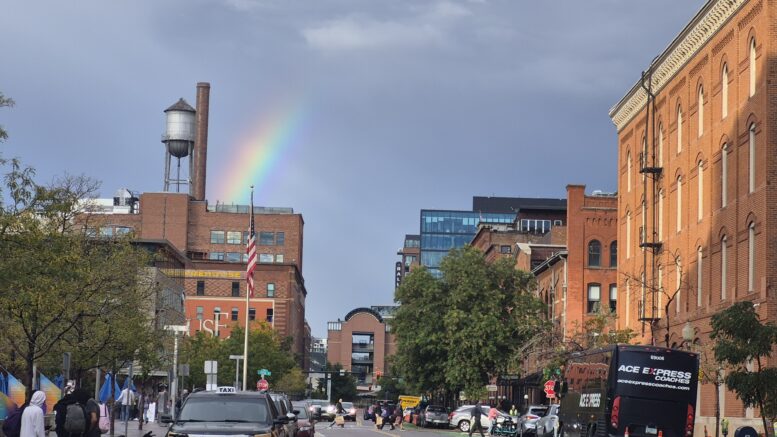
At a conference last month, a high-ranking executive from a local business walked up to a Denver South executive, struck up a conversation about the business atmosphere and asked point blank: “Is it really that bad?”
The question came after a summer when Colorado’s reputation for business-friendliness took one hit after another. CNBC dropped Colorado from No. 11 to No. 25 in its Top States for Business rankings, and U.S. News & World Report moved it closer to the middle of the pack as well. The Wall Street Journal, meanwhile, ran a front-page article dubbing Denver as “America’s emptiest downtown.”
David Worley, president/CEO of the economic-development organization trying to draw companies to the south Denver suburbs, said that comment confirmed to him that the work with which he was already engaged had to be finished. And in early October, Denver South released “Yes. And … Colorado,” a research report that acknowledges the headwinds that businesses in this area face but also points to a slew of conditions showing that the atmosphere is better than those headlines make it seem.
Denver South’s report came less than a month after a separate group of business and civic leaders launched a marketing campaign, “Denver. The Best Return on Life.,” that touted the advantages of the Mile High City to entrepreneurs in Portland and Seattle. Its aim, said Matt Joblon, CEO of Cherry Creek-based real-estate investment firm BMC, was to push back against the negative publicity that’s begun to make it harder for businesses to raise capital from national sources and also to try to increase in-migration of employers.
Why the groups are leading these efforts
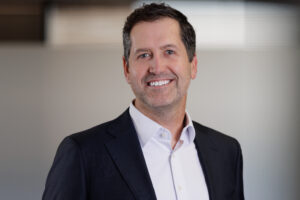
David Worley is president/CEO of Denver South
Neither campaign seeks to gloss over the obstacles that have fueled Colorado’s descent from its one-time perch as the national darling of the business scene. Leaders of both acknowledge that the increase in regulations on employers, documented particularly by a Colorado Chamber of Commerce report, has become stifling and that job growth has suffered as a result.
But if Colorado is to bounce back from the blows it’s taken while it’s working to change some of the anti-business sentiment coming from state and local governments, it must boast of its advantages and show why business has flocked here for so long, they said. And having the same business leaders who are pushing for regulatory change also leading the charge for why this is still a great place to run a company is the way to do that.
“There was a real concern that the over-negativity could be like a self-fulfilling prophecy — that we’re speaking about how horrible things are, and people could really begin to believe that,” Worley said in an interview. “Our story has gotten really out of balance … We’re just pulling up all of the learning and understanding to say, ‘If you look at it from a higher level, things are better than people think at this moment.’”
The two campaigns took different tacts to telling the greater story of the area.
Economic-development perspective
Worley, whose missive is aimed more at reinforcing the business community in Colorado, wanted to focus on numbers reflecting greater success. He pointed to U.S. News’ recent decision to rank Colorado as the No. 1 state for education. He noted the 143 businesses that chose to move to or expand in Colorado since 2019, even as a lot of focus has been on the 98 that chose to move away or expand elsewhere.
He cited a statistic that hasn’t been talked about quite as much — Colorado’s success in attracting venture capital. In 2025, he found, investors put $7.4 billion into Front Range businesses — more than the amount raised by companies in Atlanta, North Carolina’s Research Triangle and Minnesota’s Twin Cities combined.
And he went against the grain to argue that the cost of living in Colorado should be considered an advantage rather than the giant disadvantage many feel it’s become as it ranks consistently as one of the most expensive housing markets in the U.S. Worley’s perspective is that as the head of an organization that regularly tries to draw companies from Europe or one of the coasts, he is told repeatedly that Colorado’s costs are not out of whack — and he notes that rents are falling in the Denver metro area.
“If you talk with European business leaders, they don’t blink at all at the affordability,” Worley said. “I just think that the idea that we’re unaffordable and that that’s killing us, particularly when you talk to some of the companies we’re recruiting, is just not the case.”
A message about Denver’s upsides

An image from the “Denver. The Best Return on Life” campaign
Joblon and his partners, who include former DaVita CEO Kent Thiry and Downtown Denver Partnership President/CEO Kourtny Garrett, focused on the recent improvements the state’s largest city is making and also on the work/life balance it affords. Ads being shown in competitor cities, which soon will expand to include Los Angeles and Chicago, speak of the culture of contributing to innovative companies during the week but then exploring world-class restaurants at night and going to bike or hike on weekends.
Garrett also emphasized that Denver, while it continues to work to bring employees back to their downtown offices, has managed to retain all its sports teams in the central business area — an accomplishment that few other large cities have achieved. It’s beginning to refill empty spaces and getting city government to invest in it, and that’s a story that can attract investors, entrepreneurs looking to grow and established large businesses looking for a new market, she argued.
Joblon said the idea stemmed partially from his efforts over the past 18 months to pitch to investors who initially blanched at the idea of putting money into Denver but grew more interested when he told them of positives not being accented in the headlines. He noted that other cities, including San Francisco and Columbus, have undertaken similar marketing campaigns, and he expects to see more locations do the same as they realize that it’s a lot easier to grow their revenue by boosting the level of sales and income taxes from businesses than it is to make cuts to services.
“Our goal is to attract businesses and people and investors back to Colorado,” Joblon said, noting that the campaign is 100% privately funded, even as it’s supported by public leaders like Denver Mayor Mike Johnston. “I think all states are going to start campaigning pretty heavily for people, businesses and investments … We wanted to be one of the early adapters of that.”
A need to sell residents on businesses’ benefits
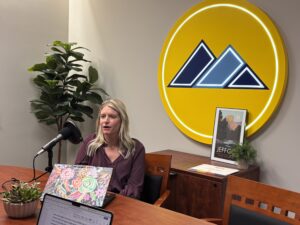
Jefferson County Economic Development Corp. CEO Kami Welch discusses her organization’s recent feasibility study on the “Colorado Chamber Office Hours” podcast.
Yet, there is one more crowd that business leaders need to reach to jump-start what Jefferson County Economic Development Corp. CEO Kami Welch calls a “flat” economy — the people of Colorado themselves, she said. Her organization just completed a feasibility study involving interviews with some 35 local business leaders, and in addition to the regulatory headwinds and childcare and housing pricing obstacles, they cited community opposition to business growth as a major impediment.
That opposition, whether to companies looking to grow or to the construction of affordable housing that employers need to find homes for their workers, has become both more sophisticated and more motivated, and it’s become a major headwind, Welch said. She is asking how business leaders can explain their stories better to locals as well as to employers and entrepreneurs in other cities, so that communities can work more closely with firms to support expansion and increase the slowing rate of job growth.
“When businesses are successful, that means we’re creating jobs. And when we’re creating jobs, that means that people have paychecks — which means they go and spend those at restaurants and local retailers, and more of those get to open,” Welch told the “Colorado Chamber Office Hours” podcast. “The intersection of why these things are important is really valuable. And I think we’ve lost a little bit of the narrative over the years as to why it is important to create jobs and to have new construction and housing in our communities.”
All three emphasized too that a final crowd that needs to see these studies that both extol Colorado’s positives and call on officials to work on improving the negatives is government officials, particularly at the state level. Welch said the top finding of her study was that Colorado suffers versus other states when it comes to the pace at which employers can get set up and begin hiring workers and producing goods, and regulatory reform must address how to boost speed to market.
What impact will these have on economic development?
“It’s not Denver South’s intention to let off on the Legislature,” Worley added, pointing to increased regulations on employers in every industry. “We’ve had some really troubling decisions come out of the Legislature in the last five years.”
But the reports are meant to serve as wide-eyed pathways forward, acknowledging issues while also pointing to the ways that Colorado remains a top-choice destination.
Joblon said he believes his group’s efforts will appeal to people wanting a better atmosphere in which they could grow their companies and contribute to the growth of their workers. Welch’s study points particularly to the aerospace and quantum sectors as industries in which Colorado should exploit its competitive advantages.
The reports alone won’t reverse the state’s backsliding on its business reputation, and they aren’t going to move mountains immediately, Joblon and the others said. But they should help to paint a more balanced picture that can help state leaders see what strengths they have and figure out how to fix weaknesses and build from there.
“It’s a both/and. It’s not an either/or. And it’s not going to happen overnight,” Joblon said. “It’s going to be two or three years when we’ve got to put in the energy and fix the issues. And you’ve got to accentuate the positive.”