
Younger voters pushed Amendment 87 to victory in this month’s election — and could have even greater effects on Colorado’s tax policies on businesses going forward, as they hold disparaging views about capitalism, a new poll revealed Monday.
A survey by the bipartisan Colorado Polling Institute found that voters under the age of 45 supported Amendment 87, which will replace the state’s flat 4.4% income-tax rate with a graduated system come Jan. 1, by a more than 2-to 1 margin of 68% to 32%. That more than offset voters aged 45 and older, who rejected the proposal by a margin of 62% to 38%.
It ended up passing by about 91,000 votes, with a margin of 51.7% to 48.3%, according to the Colorado Secretary of State’s Office.
National commentators have said for the past two weeks that younger voters played an outsized part in this month’s blue tsunami, which flipped the U.S. House and Senate for Democrats and gave the same party supermajorities in the Colorado House and Senate. But the CPI data, gathered from a survey from Oct. 30 through Nov. 5 of 605 ballot-casting Colorado voters, was the first evidence of just how significant that same demographic group was in determining the outcome for the biggest business issue on the ballot.
Younger voters backed Proposition NN by similar margins
Amendment 87 will replace the flat income-tax rate, viewed as one of Colorado’s biggest competitive attributes for job expansions and relocations as the state has become increasingly expensive and regulated, with a tiered system. Businesses and individuals will pay 7.4% on income earned over $500,000, 7.9% on income earned over $750,000 and 8.4% on income earned over $1 million — changes that will extract about $2 billion more in annual taxes to be used for K-12 education, healthcare and childcare.
Voters under the age of 45 also split notably with older voters on Proposition NN, which raised the state’s Taxpayer’s Bill of Rights revenue cap by about $4.6 billion annually to boost school funding and allow more room in the budget for new fees and fee increases. Younger voters favored it by a margin of 70% to 30%, while older voters rejected 55% to 45% — another margin that both the Democratic and Republican pollsters working with CPI called eye-opening because of the generational chasms forming around economic issues.
“What we are seeing is a generation that did what they were told but are not getting what they expected,” Weigel, a Republican pollster for New Bridge Strategy, said during an online news conference Monday, noting the difficulty they have in buying homes or building wealth in a high-cost state. “When you feel that things aren’t fair, you’re going to vote for change.”
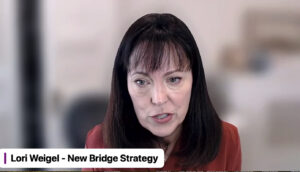
Pollster Lori Weigel of New Bridge Strategy speaks during an online news conference on Monday.
That desire for change also is reflected in the questions that CPI pollsters asked about voters’ attitudes toward socialism and capitalism.
Younger voters view socialism favorably
Overall, Weigel noted, 39% of respondents viewed socialism favorably versus 51% who viewed it unfavorably, while capitalism had a much better split of 57 % favorability versus 36% unfavourability. Of the eight questions asked about the favorability of specific office-seekers, major political parties and economic systems, in fact, capitalism scored the highest, even beyond the 48/33 favorability split earned by Democratic Gov.-elect Phil Weiser.
But voters between the ages of 18 and 44 offered very different outlooks. They offered 54% favorability for socialism versus just 33% unfavourability. And while 50% of respondents in that age group rated capitalism unfavorably, just 40% said they held favorable views of the economic system, which Weigel called a “massive generational divide.”
Democratic pollster Kevin Ingham of Aspect Strategic added that the generational split was his biggest surprise of the polling results, which had a 4% margin of error. It signals that long-established systems of thought on economic measures in Colorado are starting to break down, paving the way for new ideas on everything from housing to health care if those voters stay as active as they did in the 2026 election.
Yet, voters say Colorado taxes are too high

Pollster Kevin Ingham of Aspect Strategic speaks during an online news conference on Monday.
“Younger voters are the ones that are personally struggling, and they are the ones most interested in an alternative to capitalism,” Ingham said, noting those voters also have the least amount of trust in all sorts of major institutions. “That doesn’t mean that they support a full seizure of the means of production, but they want something else.”
Intriguingly, 54% of voters overall said that they feel Colorado taxes are too high now — 29% calling them “way too high” and 25% saying they were just too high — versus only 16% calling them too low considering the range and quality of services provided by government. While higher earners will pay the $2 billion in new taxes Amendment 87 is expected to generate, supporters of the measure noted that income between $100,000 and $500,000 annually will stay at the 4.4% rate, and income below that level will be taxed at lower rates.
Among all voters, the poll found that the cost of living was, by far, the top issue that Colorado residents would like the state government to address, earning twice as many mentions as any other subject in the open-ended question. Ranked behind it were housing affordability, taxes and healthcare.