
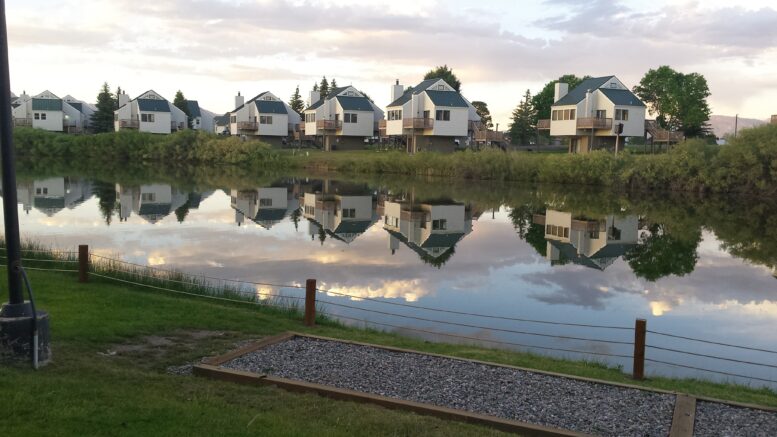
While legislators continue to consider numerous ways to fund affordable housing this session, one potential solution that won’t advance is a proposal to let local governments establish vacancy taxes on empty homes, which a committee killed on Monday.
House Bill 1036, sponsored by Democratic Reps. Brianna Titone of Arvada and Elizabeth Velasco of Glenwood Springs, was one of the more out-of-the-box solutions offered by housing advocates, having been tried in only a few locations in the U.S. or Canada. And it generated significant criticism from the Realtor community in particular, which argued the bill would raise the cost of single-family homes rather than lower it, scare off potential community investors and impact apartments as well.
After a four-and-a-half-hour hearing, three Democrats on the House Finance Committee joined all four of the panel’s Republicans in voting down the effort, saying that they questioned the impact of the plan as well as the feasibility of enforcing such a law. And several made it clear that while they are willing to examine new ways of incentivizing or paying to build affordable housing, taxing people for not using their existing homes as much as local governments would like is not the answer.
“You can’t make housing more affordable by making it more expensive,” said Tyrone Adams, CEO of the Colorado Association of Realtors.
Origin of the vacancy tax idea
HB 1036 was one of several bills suggested by the Colorado Association of Ski Towns, whose members face acute workforce housing shortages that leave some service-industry employees commuting for hours and that help to fuel labor shortages. But it’s the one that garnered support from legislative sponsors, as city and county leaders say that second homes that sit vacant for a majority of the year create a lag on local sales-tax revenue when they could instead be offered as long-term rentals for local workers.
As introduced, the bill did not define what would constitute taxable vacant housing but instead would have left it up to local governments to make that determination. Those governments also would have had to seek voter approval to enact the tax and would have been limited to using the revenue for affordable or workforce housing.
Local leaders expressed frustration at the growing percentage of residences in their communities that are second homes and are left vacant for long periods. The bill exempted licensed short-term rentals from potential taxation.
More than half of the single-family homes built in Salida in recent years are owned by residents of other counties, and a full half of that group of owners is located out of state, leading to a 23% vacancy rate in residences, city administrator Christy Doon said. And 40% of the 6,000 living units in Eagle County are second homes or vacation rentals, testified Elizabeth Haskell, a legislative and policy advocate for the Colorado Municipal League.
A problem caused by the “ultra-wealthy”?
While many of those homes sit partially vacant, workers can’t afford to buy a home nearby and find a distinct lack of options for long-term rental, officials added. The median price of a home in Steamboat Springs is $1.7 million, requiring a salary of $378,000 — or 350% of the city’s median income — to be able to afford such a residence, City Council President Pro Tem Gail Garey said. As a result, 3,500 workers a day commute into the city of roughly 13,000 residents.
Backers argued that if owners of often-vacant homes don’t want to pay a locally approved tax, they could rent their homes and alleviate the workforce-housing shortage. They argued that backing the bill would be good for local businesses needing workers.
“Homes that sit empty do not meaningfully contribute to local sales tax,” Titone argued. “Affordable housing can’t be built without incentives. The housing stock is being eaten up, and the people who want to buy it have no way to afford it.”
Velasco went further to paint the bill as one that could help to level what she called an increasing divide between rich homeowners and working-class laborers.
“I want the ultra-wealthy to pay their fair share to support our working families,” she said.
Apartments, unsold homes could have been subject to tax
But a slew of opponents and legislators took offense at the characterization of all second-home owners as being extravagantly rich. Several witnesses were retirees who testified that they purchased their second homes to spend part of the year near their children and help to raise their grandchildren and added that a new tax could push them to sell their homes and exit the community.
Numerous officials pointed out that the language of HB 1036 would have applied it to far more than Aspen mansions, which several people added likely would not be within the rental-price range of service-industry workers even if they were up for rent.
Colorado Association of Home Builders CEO Ted Leighty said that the tax could hit homes that have been built but not sold or have gone onto the market without selling, which would likely increase their price tags. Colorado Short Term Rental Association Executive Director Julia Koster said that with only licensed short-term rentals being exempted, the tax could hit people trying to get licenses in places like Breckenridge, where the waiting list is estimated to stretch for years.
And Andrew Hamrick, general counsel for the Colorado Apartment Association, noted that the wording of the bill also would encompass vacant apartments at a time when vacancy rates are rising not because of absentee owners but because of increasing supply. That kind of unique regulation likely would scare off investors weighing between several states in which they could build, and it could result in a slowdown in construction that would exacerbate workforce housing shortages even more, he said.
Efforts to save vacancy-tax bill
“What these localities need are more units. They don’t need a tax on units,” Hamrick said, adding that the proposal, unlike excise taxes that put additional fees on certain activities like smoking and alcohol consumption, represented a sort of tax on inactivity.
Titone added a slew of amendments to try to save the bill, exempting timeshares, housing for seasonal agricultural workers and housing that is vacant due to the owner’s death. Sponsors also added an amendment that would prohibit a local government from putting the tax into place if there wasn’t at least a 25% vacancy in its housing stock and would turn the tax off if the vacancy dropped below that number.
But Republicans like Rep. Max Brooks of Castle Rock blanched at the underlying idea that government could tell people how to use the property they own — and tax them if they don’t use it in that preferred way. And Democratic Reps. Sean Camacho, Rebekah Stewart and Bob Marshall expressed concerns about the fairness of the idea and about how local governments would determine if someone was really occupying a house, with Marshall noting the roughly 70 home-rule cities in Colorado can already seek this tax if they want.
More controversial housing debates to come
“There’s not a single business entity that supports this,” Marshall added before casting his “no” vote that led the bill to fall by a 7-4 margin in the committee. “And it’s not like the chambers of commerce hate workers. They want housing.”
With HB 1036 defeated, attention will shift back now to a package of affordable-housing proposals touted by Gov. Jared Polis and legislative Democrats that seek to boost housing near transit lines and remove some local approval requirements that slow construction. The main bill in that package — HB 1001, which would let educational institutions, housing authorities and certain nonprofits build structures up to three stories on parcels of five acres or less as a right — passed the House Friday on a largely partisan, Democrat-led vote.
But more proposals, some which may carry as much controversy as HB 1036, are on their way as well. Near the end of Monday’s hearing, Rep, Steven Woodrow, D-Denver, said he is within weeks of introducing a bill that would allow use of a land-value tax system that values land based upon its highest-value usage — often a multi-story building rather than a single-story structure in urban situations — and incentivize denser housing construction.