Supporters of a proposed ballot measure to boost Colorado road funding have rejected a legislative offer to set up a working group to address the issue if they abandon Initiative 175, saying they won’t drop their effort even before any meaningful talks have begun.
The decision, made Monday by the Restore Our Roads campaign and announced Tuesday in a news release, sets up what likely will be a high-profile debate around the funding of state roads on an already crowded November ballot. It comes even after Gov. Jared Polis on Thursday signed into law a late-session bill that will cut road funding by $700 million if voters approve Initiative 175.
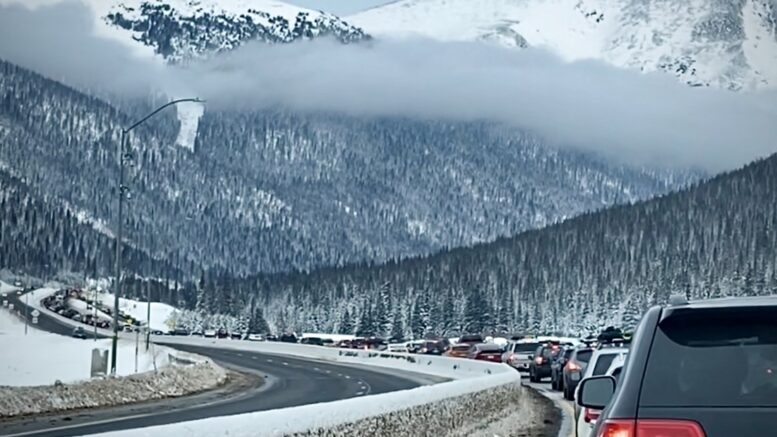
The initiative seeks to put all state sales-tax revenue from the purchase of vehicles and automobile parts to construction and maintenance of roads — a sum anticipated to mean about $700 million a year in new road funding. Backers, led by the Colorado Contractors Association, say the state has done too little to fund a highway and roadway network that is increasingly congested and ranked as having some of the worst interstate pavement conditions in the country.
But after two years of implementing budget cuts and ending tax breaks to plug billion-dollar budget shortfalls, majority legislative Democrats say they can’t afford to redirect to roads money that otherwise could go to Medicaid, K-12 schools and higher education. So, they passed HB 1430, which will cut existing transportation funding by about $700 million annually for three years if Initiative 175 passes, essentially leaving money for other services untouched and ensuring that road funding stays flat.
How a new law counteracts the road-funding ballot initiative
HB 1430 makes those cuts by lowering the gasoline tax from 22 cents per gallon to 14 cents, reducing the special fuel excise tax on diesel fuels from 20.5 center per gallon to 13 cents and cutting the road-usage fee, which functions like a per-gallon gas tax, from 6 to 4 cents. It also reduces vehicle-registration-fee rates, road-safety-surcharge rates on vehicles and late-registration fees by 38%. And it maintains the cuts until July 2030, when bill backers say the state should be in a more stable budgetary place again.
As the bill passed through the Senate, sponsors also added a clause specifying that if the Restore Our Roads campaign ended its efforts on Initiative 175 by June 15, the bill would not go into effect and instead the state would form a working group to discuss road funding. The idea was that this group could meet behind closed doors and try to work out a solution acceptable to all parties, much like a Polis-appointed working group did this year on artificial-intelligence regulations.
CCA Executive Director Tony Milo initially balked at the offer, saying it left the campaign in the potential position of coming away with nothing to show for its signature-gathering efforts, but said he would discuss it all the same with bill sponsors. On Monday, however, Milo and other leaders of the campaign shut the door on that possibility, saying they intend to proceed to the ballot and let the voters decide this issue.
An intriguing pitch to voters
The campaign could be tricky, asking voters to support a measure that won’t end up boosting funding for roads in the near future. But Restore Our Roads gave a preview of its messaging in a Tuesday news release, noting passage of Initiative 175 would produce three years of gas-tax and vehicle-registration fee cuts, followed by a boost in road funding courtesy of sales-tax revenues that are more stable than the declining gas-tax revenues.
“Road transportation money should fund roads, and Initiative 175 finally does that — without raising taxes,” Milo said in the news release. “It’s unfortunate Gov. Polis is forcing Coloradans three more years to fix the roads, but in the meantime, they will get a much-needed break at the pump and, over the long haul, safer, better-maintained roads.”
Initiative 175 supporters turned in 188,000 petition signatures two weeks ago — a total far above the required 124,238 signatures, leaving little doubt that it will qualify for the ballot. The Colorado Secretary of State’s Office continues to review the validity of the signatures, however, and is expected to rule on them by the end of this month.
The four Democratic sponsors of HB 1430 sponsors — Reps. Andy Boesenecker and Emily Sirota and Sens. Judy Amabile and William Lindstedt — expressed disappointment in the decision of Initiative 175 backers in a statement they issued on Tuesday.
“We could be working right now on a solution to better fund our roads, but instead the road building contractors walked away,” the statement read. “Now, Coloradans are left with only bad choices when what we deserve is better roads and transit.”
The decision to proceed with the ballot measure is unlikely to mute the opposition to Initiative 175 that’s risen from the Keep Kids First Issue Committee, a coalition of education, healthcare and transit supporters. It comes also as some environmental groups have criticized not just the ballot measure but the amount of money that is scheduled to go to highway expansion in the Colorado Department of Transportation’s 10-year plan update, which was released on May 21.
Is CDOT spending too much or too little on highways?
That plan sets aside about 36% of CDOT spending over the next decade for roadway-capacity expansion, including nine-figure expansions of Interstate 270 and of Interstate 25 north of Denver, according to an analysis by the Southwest Energy Efficiency Project. And while it dedicates half of its spending to road-safety and -maintenance initiatives, it seeks to dedicate only about one in every seven dollars to transit or active transportation.
Groups like SWEEP argue that the state needs to do more to offer transit options to state residents to get them out of single-passenger vehicles, which in turn would reduce both congestion and emissions. The transportation sector is one of the largest contributors to manmade emissions in Colorado, but it has not seen the same substantial decrease in pollution that the manufacturing and utilities sectors have over the past decade.
“Colorado has set clear goals to expand transportation choices beyond driving in order to build a safer, cleaner, more affordable transportation system. As it currently stands, CDOT’s drafted 10-Year Plan is unable to achieve that vision,” SWEEP wrote in an analysis of the plan released last month. “The plan’s overcommitment to expensive highway projects leaves transit, bike and pedestrian, and future rail projects woefully underfunded over the next decade.”
Road-funding debate part of overstuffed ballot
Thus, Monday’s decision gears up a debate that will ask not only if the state spends too little on roads but also may include voices saying that it’s spending too much on highways. And it likely will be a part of an extremely crowded ballot.
That ballot will feature open races for all four statewide offices — governor, treasurer, attorney general and secretary — as well a U.S. Senate race and legislative contests that will determine if Democrats can win back a supermajority in the House. It is likely to feature a host of ballot measures that will, among other things, ask to replace the state’s 4.41% income tax with a progressive income-tax system and allow the Legislature to keep billions of dollars annually that otherwise would go back to voters as TABOR refunds.
In addition, there could be another transportation-funding measure on the November ballot to stoke the debate even more. The Front Range Passenger Rail district is considering asking voters within the Insterstate-25-centric district for a tax hike to help build out the train that is proposed to run from Pueblo up the Wyoming line.