Backers of a plan to boost funding for roads by $700 million a year will pull their initiative off the November ballot after working out a multi-year plan with government leaders to boost legislative spending on transportation and send a different question to voters in 2027.
Leaders of the Restore Our Roads campaign announced a deal Thursday that they had reached with key legislators and with Attorney General Phil Weiser, the Democratic nominee for governor. It will require backing from the General Assembly next year but is likely to be embraced by many stakeholders as a consensus plan that will boost road funding without shifting money away from other priority areas of state government.
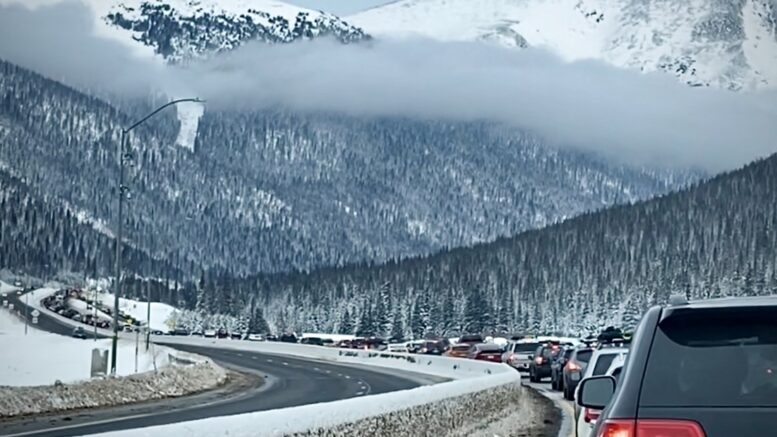
Colorado Contractors Association leaders and their coalition partners had proposed through Initiative 175 to redirect all sales-tax revenues from motor-vehicle sales and two-thirds of such tax revenues from automotive-parts sales to highway funding, producing a wave of new money for roads. CCA Executive Director Tony Milo said the measure, which had clearance to appear on the November ballot, was necessary because legislators have ignored the maintenance and highway-expansion needs that have led to bottlenecks and cracked pavement for too long.
Fearing a $700 million transfer from areas like K-12 education or Medicaid could harm such programs, legislative Democrats passed a bill in May that would reduce current transportation funding by about $700 million for three years if voters approved the initiative. They offered also to set up a working group on transportation funding if backers jettisoned Initiative 175, but organizations like the Colorado Contractors Association rejected the plan, saying they’d take their chances with an initiative to boost road funding in three years.
Good-faith negotiations on funding for roads
But the two sides kept talking — a dialogue Boesenecker and Milo attributed to the persistence of each other, with the aid of Weiser, to find a solution rather than engage in an expensive ballot battle that still wouldn’t move the needle on funding until 2030. And while exact funding amounts remain a moving target, the two men said in separate interviews with The Sum & Substance Thursday that they have agreed to an outline that constitutes the heart of the deal.
Boesenecker and legislative leaders will put forward a bill next year that would dedicate substantial recurring funding to roadway maintenance and construction — something in the neighborhood of $120 million, the Fort Collins Democrat said. The money could come in part from money going to enterprises set up in a $1.3 billion 2021 transportation-funding bill — enterprises funding functions like transit and transportation electrification — or could come from other areas and be put into a new enterprise, they said.
While some highway advocates have criticized the state for putting fees on Uber and Lyft rides, gasoline sales, Amazon deliveries and other transactions to uses other than road construction, Milo said his group is not aiming to undercut the current use of those fees. His biggest concern is getting these newly specified highway funds into their own enterprise so that legislators can’t decide on a whim to redirect them to other uses as has happened in the past with general-fund transportation expenses, he emphasized.
Another roads ballot initiative coming
In addition to dedicating tax or fee revenues to roadways, the arbiters of the deal, including legislative leaders and the potential next governor, would support a 2027 ballot initiative, backed again by Restore Our Roads, to create a new funding stream for transportation. That initiative likely will involve asking voters to support bond sales for needed roadway projects and also could involve use of low-interest federal transportation loans that could kickstart some of the important work that is needed.
Milo said that while the initial funding agreed to in the deal is lower than the $700 million in annual new allocations that Initiative 175 sought, the agreement could get increased money more quickly to Colorado roadways. And rather than doing it via a contentious ballot measure, that boost would come with backing of numerous key state leaders, providing a foundation for further productive discussions on transportation-infrastructure needs.
“Our objective was to get as much money as we could as soon as we could for Colorado’s roads and bridges,” Milo said. “That’s the only way we’re going to make any progress.”
“We want to find more resources”
Boesenecker noted that with the ballot measure, the deal could generate billions of new dollars for roads over the next decade, allowing Colorado to put money into an infrastructure system criticized recently by everyone from CNBC to the Reason Foundation. He emphasized that even as he was steering House Bill 1430 this year to reduce road funding in order to protect education and healthcare funding, he never shied from the fact that more repair money is needed — and the deal serves as evidence to that.
“There has never been a disagreement that we want to find more resources to fund the transportation system in this state,” Boesenecker said. “What that looks like is the work that we’re going to be doing together … This was driven by good-faith negotiations and the fact that the Legislature has been the convenor of these conversations.”
The agreement drew lauds as well from Weiser, who was actively involved in talks and wrote in a news release that it “will meaningfully fund our transportation system and protect scarce resources for other critical services.” And it also drew applause from Gov. Jared Polis, who was highly critical of the potential revenue reallocations proposed by Initiative 175 and said this will improve the state’s roads and transportation system.
Other business organizations involved in the negotiations also praised the outcome. Loren Furman, president/CEO of the Colorado Chamber of Commerce, noted that Coloradans “need to be able to rely on safe and dependable infrastructure, and businesses statewide continue to rely on that same transportation network to operate, compete and grow long into the future.”
A crowded ballot still
While details of both the proposed legislative changes and the ballot initiative are yet to come, Milo said that one point of agreement was that the first $250 million in annual funding from any bond sales would go to existing maintenance needs. That way, the state will ensure that it isn’t taking money from existing maintenance funding and using it to fund newly build highways and bridges that will deteriorate quickly if not maintained.
The deal removes one of the biggest business-facing initiatives from a ballot that already will be crowded with open-seat races for governor, attorney general, treasurer and secretary of state. Democrats also will work to flip one seat each in the state Senate and House, which would give them veto-proof majorities next session.
It will not mean that business leaders won’t be busy, as the ballot will include initiatives proposing a constitutional right to natural gas (as a proactive measure to stop forced electrification of homes and businesses) and a cap on the state’s 4.4% income-tax rate. And the Colorado Secretary of State’s Office is still verifying signatures to determine whether a proposal will make it to the ballot to replace the state’s flat income-tax rate for businesses and residents with a graduated system under which companies and people who make more money pay higher income-tax rates up to 8.4%.