A bill that would ban the use of surveillance data to set individual prices and wages is one procedural step away from Gov. Jared Polis’ desk — and is set to test his increased willingness this year to sign laws that allow for greater regulation of disruptive technology.
House Bill 1210, which passed the Senate on a 19-15 vote Wednesday, defines surveillance data as information collected on individuals using online habits such as their search history, purchase patterns and geolocation history. It does not bar the gathering of such data but instead bans companies from plugging such information into algorithms that determine a price that individuals will be offered for goods and services or the wages that an employer will offer to job applicants.
Sponsors and backers of the bill cited multiple instances during legislative debate in which such data has been used for nefarious purposes. A travel company raised airline-ticket prices for people searching for funeral arrangements. A test-preparation company charged more to people living in zip codes with high numbers of Asian residents. Employers have offered lower wages to people searching for payday loans or divorce lawyers, assuming they are desperate for work.
“We put our most intimate thoughts into our phones — our texts, our searches, our geolocation data. And the biggest companies in the world are collecting that data and selling it to other companies who are deciding how much to charge us as individuals,” cosponsoring Rep. Javier Mabrey, D-Denver, said during House debate on the bill on March 26. “And this isn’t science fiction. This isn’t ‘Minority Report.’ This is real, and it’s called surveillance pricing.”

Colorado state Reps. Javier Mabrey and Jennifer Bacon explain their bill on surveillance data to the House in March.
Surveillance data also guides discounting, businesses warn
Business leaders argued, however, that if Colorado becomes the first state to pass such a law, it will more likely put its companies and customers at a competitive disadvantage because retailers couldn’t use data to find new customers to whom they could market. HB 1210, they said, would ban increasingly common techniques, like offering discounts to potential customers who put goods in an online checkout cart but didn’t complete the transaction or like allowing restaurants to have different discounts for loyalty-club members of different tiers.
“Unfortunately, the results of this bill would mean fewer discounts, fewer offers and higher prices for customers,” warned Andrew Wood, regional executive director for the TechNet industry group. Despite sponsor attempts to exempt several forms of discounting, the bill’s definitions remain too broad and could subject companies to liability via Deceptive Trade Practice violations, he and others told the Senate Business, Labor & Technology Committee on April 21.
Both sides pointed to polls to justify their positions. The American Economic Liberties Project found that 78% of people supported bans on the use of such data to generate individualized pricing and wages. Meanwhile, the technology-focused Chamber of Progress found in a poll done with Morning Consult that 70% of Coloradans oppose bills that could ban loyalty programs or online coupons.
After some amendments were made in the House, HB 1210 moved forward on largely party-line votes. Just one Democrat joined with Republicans in opposing it in the House, while three members of the majority party teamed with the GOP to vote “no” in the Senate. House members must take one last vote to concur with small amendments made in the Senate, and then the bill will head to Polis.
Polis leery of over-regulating technology

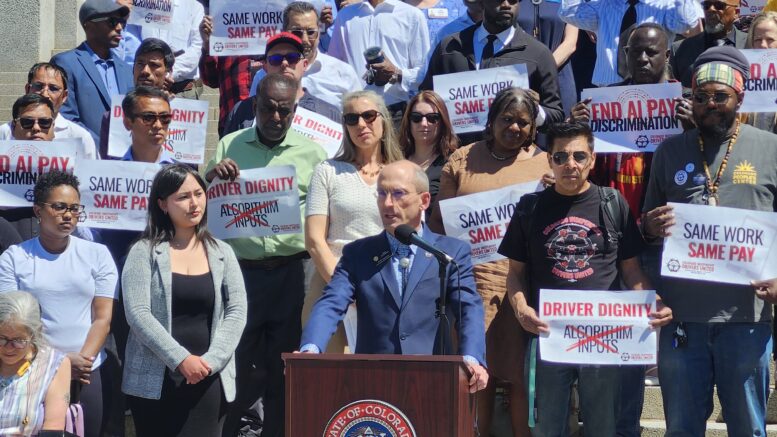
Towards Justice Executive Director David Seligman speaks for a bill to limit the use of surveillance data at an April 21 rally at the Capitol.
While the Democratic governor has not stated a position on the measure, there have been indications that proponents worry that he’s not willing to support it. During an April 21 rally for the bill on the Capitol’s west steps, for example, David Seligman, a civil-rights activist and executive director of the Towards Justice law firm, seemed to challenge Polis to sign HB 1210 if it reached him.
“Colorado can make a different choice this session. We can just decide we’re not going to put up with it anymore,” said Seligman, also a candidate for the Democratic nomination for Attorney General, referring to the bill’s death in its first committee in 2025. “The only question regarding this bill is whether lawmakers in this building and the governor are going to do the bidding of the corporate lobbyists and the donor class or whether they are going to listen to the voters of this state.”
Polis, who founded and sold two online companies during the dot-com boom before getting into politics, has long defended disruptive technologies and pushed back hard on efforts to regulate them, even when they come from members of his own party. Last year, for example, he vetoed a bipartisan bill that sought to require social-media platforms to police their content and remove potential criminal offenders, and his threatened vetoes buried other bills, including one to require age verification for adult websites.
New laws show changing attitude

Gov. Jared Polis signs Senate Bill 11 while surrounded by backers of the law in March.
In March, however, he signed Senate Bill 11 into law, requiring social-media companies to respond more quickly to warrants seeking information on criminal activity. And on Monday, he signed a measure that requires adults who feature children in revenue-generating online content to set aside a percentage of earnings in trust funds for those children and for online platforms to inform those adults about their responsibilities regarding “kidfluencers.”
Businesses will make the case to Polis that HB 1210 not only could raise the prices of goods by eliminating discounting at a time when the cost of living is rising but could shut down other opportunities available to Coloradans.
Alison Morgan, director of government relations for the Colorado Bankers Association, testified the bill treats many inputs used to determine credit scores as surveillance data and could lead lenders to stop using those inputs and tighten loan allowances as a result. Brittany Morris Saunders, president/CEO of the Colorado Technology Association, said the bill also creates uncertainty around common tools that employers use to assess compensation bands, markets conditions and performance in determining salaries.
“The bill remains overly broad and creates uncertainty around routine business practices,” Saunders said. “We believe a more targeted approach, with narrow exemptions, clear definitions and a stronger focus on transparency and truly harmful conduct would better achieve (its) goal without unintended consequences.”
Bill backers: Draw line on surveillance data

Colorado state Sen. Iman Jodeh touts House Bill 1210 at an April event at the Capitol.
Sponsoring Democratic Sens. Mike Weissman and Iman Jodeh of Aurora argued during the April 21 rally that the bill could help small businesses, which could be charged higher prices by their suppliers and don’t have the financial resources to access the trove of data that their larger competitors can use. Discounting that is across the board or that is targeted at specific groups like veterans or students would remain legal under the bill, Weissman said.
“This bill does something very straightforward: It draws a line,” Jodeh said at the Capitol rally. “You cannot use private personal surveillance data to secretly decide the maximum price they’ll pay or the minimum wage they’ll accept.”
Ultimately, it will be up to Polis to decide the bill is the primarily protective vehicle that supporters describe it as being or whether it, like past rejected regulations, could do too much to harm to state’s business environment. And he’ll likely hear a ton about it before he has to sign or veto it by June 12.